

In the modern smartphone market, Android and iOS are undoubtedly the two most influential operating systems. They not only dominate the mobile device ecosystem but also profoundly impact users' daily lives and businesses' business models. The smartphone world often feels like a battle between two giants: Apple's iPhone, running its proprietary iOS system; and the vast Android device universe, powering countless manufacturers' phones. For years, users have fiercely debated which ecosystem is dominant.
Android
Is an open-source operating system based on the Linux kernel, developed by Google. It can run on a wide variety of hardware, including phones, tablets, TVs, and more. Android is renowned for its flexibility, customizability, and extensive application selection.
Hardware Architecture
Android can run on a variety of hardware, including ARM, x86, and MIPS processors. This makes it highly flexible and adaptable to various devices.
Software Architecture
Android's software architecture consists of three layers:
Linux Kernel: Android is based on the Linux kernel, which provides it with robust performance and stability.
Android Runtime: The Android runtime provides the basic software environment, including the Java Virtual Machine, graphics API, and multimedia API.
Application Framework: The application framework provides developers with the foundation for building applications, including components such as Activity, Service, BroadcastReceiver, and ContentProvider.
User Interface:
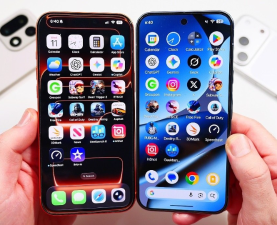
Android's user interface is defined by Google but can be customized by hardware manufacturers. Android's user interface typically consists of an icon grid, which users can interact with by tapping and swiping.
Applications:
The Android App Store boasts over 3 million applications, including games, entertainment, productivity, and social applications. Android application development is relatively easy, allowing developers to quickly launch new applications.
Security:
Android is an open-source operating system, meaning it is more vulnerable to malware and other security threats. Android employs various security measures to protect users, including sandboxing, permission management, and application signing.
Updates:
Android updates are jointly released by Google and hardware manufacturers. Android updates are generally slower than iOS updates.
IOS
iOS is a closed operating system developed by Apple. It is only available for iPhone, iPad, and iPod Touch devices. iOS is known for its user-friendliness, security, and high-quality applications.
Hardware Architecture
iOS can only run on Apple's A-series processors. This makes iOS hardware performance more stable and consistent
Software Architecture
iOS's software architecture is similar to Android's, also divided into three layers:
Darwin Kernel: iOS is based on the Darwin kernel, which provides it with powerful performance and stability.
UIKit: UIKit is iOS's user interface framework, providing an intuitive and easy-to-use user experience.
Cocoa Touch: Cocoa Touch is iOS's application framework, providing rich APIs for building applications.
User Interface
iOS's user interface is defined by Apple, which strictly controls its design. iOS user interfaces are typically composed of cards, which users can interact with by tapping and swiping.
Applications
The iOS App Store boasts over 2 million applications, including games, entertainment, productivity, and social applications. iOS application development is relatively difficult, requiring developers to invest more time and effort in application development.
Security
iOS is a closed operating system, meaning it is more vulnerable to malware and other security threats. iOS employs various security measures to protect users, including a sandbox mechanism, permission management, application signing, and hardware security.
Updates
iOS updates are controlled by Apple. iOS updates are typically faster than Android updates.
Future Development
Looking ahead, both Android and iOS are actively exploring new technological fields. Android has invested heavily in artificial intelligence and the Internet of Things, launching innovative products such as Google Assistant and Android Things. iOS, on the other hand, excels in augmented reality (AR) and health applications, continuously expanding the boundaries of its ecosystem through platforms such as ARKit and HealthKit.